Daily Glimpse November 27, 2013
Posted by Joshua Sharf in PPC on November 27th, 2013
Daily Links From Glimpse From a Height
- Google Interiors
Google is adding the interiors of some foreign train stations and airports to its StreetView. The article says that that makes it aimed at overseas travelers, but I think it’s still aimed at Americans. I’ve rarely had a problem figuring out an American airport, and I can see where a foreign airport might be laid […]
- Doctor, Have You Washed Your Hands
Via IDEO. Resembling an Apple computer mouse, the SwipeSense device clips easily onto hospital scrubs, recording every time users disinfect their hands. Together with wall-mounted proximity sensors, the system wirelessly tracks hand-washing practices, allowing doctors and nurses to see and download daily, weekly, or monthly reports, much like a FitBit, Nike Fuel Band, or other […]
- Blurring the Lines
Aaron Renn of the relentlessly engaging Urbanophile posts on the need for our legal structure to change to accommodate peer-to-peer, where people more efficiently share resources rather than owning a lot of unused or idle capacity: But beyond the sheer efficiency gains, I think it’s under appreciated in developed countries how economic informality can create […]
- Hot Stove League
Yes, the game does change. I’ve heard some fans comment that pitchers from the ’60s did not seem to throw with as much exertion as today’s hurlers, and therefore did not throw as hard. That may have been true of some pitchers in 1965, but certainly not Maloney. Although no radar gun was in evidence […]
- The Missiles of November
Ana Palacio provides a Cold War nuke analysis redux: That Iran’s push to acquire the capacity to produce nuclear weapons is partly motivated by security concerns cannot be denied. Nationalism, however, is a more important factor. It is not just that all the great powers have nuclear weapons; the problem, from Iran’s perspective, is that […]
- Richard Samuelson on Immigration and Group Rights
A conversation with Richard Samuelson about Constitutional principles, American exceptionalism, and immigration. It’s based on his article in last summer’s Claremont Review of Books on the subject. In it, he makes an argument I’ve long favored, that Jews are only secure in a country where civil rights are individual, rather than group: The more elements […]
- The Iran Nuclear Agreement As a Modus Vivendi
At Lawfare, a refresher course in the various level of international commitment: It is true that most non-proliferation agreements are concluded as Article II treaties, including the Nuclear Non-Proliferation Treaty. But the Iran agreement lacks some indicia of formality, is short term, does not appear to affect state law, and apparently can be implementedwithout legislation […]
Daily Glimpse November 26, 2013
Posted by Joshua Sharf in PPC on November 26th, 2013
Daily Links From Glimpse From a Height
- WordPress.com vs. Censorship
Going to bat for its users against DMCA abuse: The DMCA system gives copyright holders a powerful and easy-to-use weapon: the unilateral right to issue a takedown notice that a website operator (like Automattic) must honor or risk legal liability. The system works so long as copyright owners use this power in good faith. But […]
- Reprise: How AIPAC became Obama’s Syria Scapegoat
From a few months ago: It’s an odd assertion, especially as it’s quite clear that the arrow pointed in the other direction: it was the White House that asked AIPAC to put its resources at Obama’s disposal and “do the president a solid,” as one official at a Washington-based Jewish organization told Alana Goodman at the Washington […]
- Arresting Spanish Tower
Yes, that would have meant something different a little while ago. Unfortunately, they forgot to include a picture of the view from the tower. Via FeelGuide.
- Narrow Networks Suddenly a Bug, Not a Feature
Last week, the Washington Post ran a story blaming insurers for limiting choices as a result of Obamacare. Count on this to be a major part of the administration’s demonization efforts against insurance companies. Funny, I’m old enough to remember when this was a selling point.
- Tackling Cosmological Fine-Tuning
Why does the universe appear fine-tuned for life? This has been a question in science for as long as I can remember. It’s a normal question – why do physical constants that appear to have nothing to do with one another nevertheless seem to be fine-tuned to one another? Fine-tuning is a problem for scientists, […]
- Hunger Games: Catching Fire
It’s a fine review, pointing out some of the flaws in the first film that we didn’t get because we haven’t read the books. But then, I had to be talked into seeing the first movie, and perhaps rated it more highly because 1) the political analogy to today is unmistakable, and 2) I have […]
Daily Glimpse November 25, 2013
Posted by Joshua Sharf in PPC on November 25th, 2013
Daily Links From Glimpse From a Height
- What’s Farsi for “Danegeld?”
That’s the assessment of Michael Doran of the Brookings Institution: …On the nuclear question specifically, I don’t see this as stage one. In my view, there will never be a final agreement. What the administration just initiated was, rather, a long and expensive process by which the West pays Iran to refrain from going nuclear. […]
- Transport Boondoggles
They’re not just for light rail and high-speed rail. And let me put this one in a separate paragraph so you don’t miss it: building the Intercounty Connector caused the state to have to raise the gas tax. I repeat from the article: “increasing the gasoline tax.” The Washington area is famous for extreme traffic […]
- Gettysburg and the New “Proposition” of American Politics
From The Witherspoon Institute: In Lincoln’s mind, the view of America “under God” hardly translated into a sweeping set of easily identifiable and zealously enforced public policies. His Second Inaugural makes it abundantly clear that “the Almighty has his own purposes” that may or may not comport with the popular religious assumptions of even the […]
- Minimalist Moscow Cabin
Yeah, it’s probably the get-away for some well-connected plutocrat who slips Putin useful information every now and then. Still.
- Eat Your Heart Out, Macy’s
- Brady v. Manning XIV
Have they traded places? In thinking about Manning-Brady XIV, I started rereading some of those old debates and got thinking about the arguments that justified picking one over the other. After all, Brady-Manning wasn’t really about the players; it was a referendum on how you valued numbers versus winning and how much the rest of […]
- Gorgeous Linearity
Indeed. The whole post has 66 photos.
Blurring the Lines
Posted by Joshua Sharf in Business, Denver, Economics on November 25th, 2013
Aaron Renn of the relentlessly engaging Urbanophile posts on the need for our legal structure to change to accommodate peer-to-peer, where people more efficiently share resources rather than owning a lot of unused or idle capacity:
But beyond the sheer efficiency gains, I think it’s under appreciated in developed countries how economic informality can create economic dynamism. Peruvian economist Hernando de Soto noted that lack of property titles and difficulties of the formal economy perpetuated poverty because people in developing countries couldn’t access the system for credit to fuel business, etc. In the developed world we’ve got a similar problem brewing. Our economy has been largely entirely formalized to the point where we are choking in red tape that has produced an economic system that has failed too many of its residents and leading to the creation of these informal economies as a safety valve. And our societies are very ill equipped to deal with that as we’ve become excessively formalized.
We don’t need to establish property titles as we already have them, but we do need regulatory systems that enable entrepreneurship and new business models like peer to peer to thrive. What’s more, I think enabling some level of an informal sector to flourish is actually a good thing, as it’s a de facto “incubator” for new ideas that can later be developed into a more officialized system. Without a toleration of informality, these would never get off the ground.
These innovations are getting stifled by incumbents, and it’s tying up a lot of the economy’s capital. You can’t rent a room in your house through AirBnB because that supposedly turns you into a hotel, and you’re avoiding the hotel tax. Uber can’t schedule limos because that somehow is unfair to Yellow Cab or Metro Cab. The car-sharing stuff seems to have found favor, though, for some reason. Lyft began service in Denver a couple of months ago.
I agree with some of the commenters that there’s a qualitative difference between creating new value – like nanotech and 3D printing – and wringing the most out of existing resources. Living standards really rise because of the former, not so much the latter. The big improvements in quality of life happen when productivity jumps, and that’s not going to happen through renting out that spare room on a regular basis, or sharing cars.
Bear in mind that not all restrictions are just naked rent-seeking. There are externalities associated with many businesses, and making sure that infrastructure gets paid for, and that you’re not taking up your whole block’s available parking with your in-home B & B are perfectly reasonable concerns. I think most of that is already recaptured by excise taxes and gas taxes and incorporation fees and oh, income taxes. So tying up capital in inventory is something most US companies have been avoiding since the 1980s, and no fair keeping us from joining in on the fun. But unless you’re turning that money into productive ideas, someone else is going to end up capturing the benefit of your thrift.
The wrong model will end up raising the cost of owning-your-own outright to the point where it becomes a luxury. I’m not entirely sure that’s healthy, and given the way these things tend to work, it could end up reinforcing a socialist model where ownership itself becomes a blurry concept.
For that reason, among others, I tend to prefer the Lyft model to the Car2Go model, although I hasten to add that that shouldn’t be enforced through regulation. (Neither, of course, should Car2Go get the benefit of a parking subsidy as they do now.) I think it’s healthier when the individuals own their own cars, rather than surrender ownership of a large part of the available fleet to what will end up being a small number of owners. Private ownership also ends up making it more likely that individuals will recognize an individual payment, rather than just avoiding an expense. Not only is that likely more satisfying, it’s also likely to result in more of the experimentation that we’re trying to encourage.
The other reason that a company going into business as a clearinghouse might prefer the Lyft model to the Car2Go model is the capital expense. Car2Go has to spend a lot of money to buy a fleet large enough to make the service worth using, to make sure that there will be cars available. And right now, it seems to be all tiny SmartCars. I suspect that the existing vehicle inventory out there on the road (or in the garage, as it were) pretty closely mirrors the overall composition of what people actually want to be driving. Why try to guess at a fleet composition, when the country has already done that math for you?
As always, read the whole thing.
Volunteering For Our Own Victimization
Posted by Joshua Sharf in Foreign Policy, Iran, War on Islamism on November 25th, 2013
Michael Doran of the Brookings Institution argues that the Iran deal is this days well-known version of the danegeld, in this case, making substantive concessions just for the purpose of keeping talks going:
…In my view, there will never be a final agreement. What the administration just initiated was, rather, a long and expensive process by which the West pays Iran to refrain from going nuclear. We are, in essence, paying Ayatollah Khamenei to negotiate with us. We just bought six months. What was the price?
We shredded the six United Nations Security Council resolutions that ordered the Islamic Republic to abandon all enrichment and reprocessing activities. We exposed fractures in the coalition against Iran. And we started building a global economic lobby that is dedicated to eroding the sanctions that we have generated through a decade of hard, very hard, diplomatic work.
It’s a dynamic that Washington has repeatedly foisted on Israel in its dealings with the Palestinians. For all that, it’s hard to argue with any of Doran’s conclusions, and the incoherence with which Obama and Kerry are defending the agreement is the hallmark of an agreement with its own internal incoherence. Smart, sensible dealings rarely need intellectual gymnastics in their defense.
Doran also suggests another parallel with the worst of the Israel-Palestinian dynamic, the attempt to build goodwill with our enemy through gestures:
In my view, that free hand was already visible in the chemical weapons deal that Obama cut with Syria’s Bashar al-Asad. I have long suspected that Obama’s retreat from Syria was prompted, in part, by his desire to generate Iranian goodwill in the nuclear negotiations. The evidence for that case is growing by the day. We now learn, for example, that the administration had opened a bilateral backchannel to Tehran well before the Syria crisis. I can only assume that the president backed away from the use of force against Assad because, in part, he saw the Syria challenge as a subset of the Iranian nuclear negotiation.
I’ve been working my way through Witness, Whittaker Chambers’s remarkable tour through the authoritarian mind. In it, he tells this story in passing:
He [Sam Krieger] explained that he had once been a Wobbly (a member of the International Workers of the World). He had been arrested somewhere in the West for some radical activity. The Civil Liberties Union had come to his rescue, and Krieger had at last gone free. For Roger Baldwin, the head of the Civil Liberties Union, he had a respect quite unusual among Communists. For while Communists make full use of liberals and their solicitudes, and sometimes flatter them to their faces, in private they treat them with that sneering contempt that the strong and predatory almost invariably feel for victims who volunteer to help in their own victimization.
I’m quite certain that’s how the mullahs think of us. The figures in Witness are all long dead, and many are kept alive in memory only through their inclusion in this book. But the authoritarian mind goes on and on.
Daily Glimpse November 23, 2013
Posted by Joshua Sharf in PPC on November 23rd, 2013
Daily Links From Glimpse From a Height
- Macy’s, Eat Your Heart Out
Via Colossal:
- A Conflict of Visions on Colorado Education
Tuesday night, the defeated Dems gathered to lick their wounds and survey the wreckage of Amendment 66. Almost universally, they were unwilling to discard the grand vision of universal day care preschool and all-day kindergarten that Amendment 66 had promised, if not sold as. Yesterday, Joyce Rankin, wife of State Rep. Bob Rankin and a […]
- Villa Overby
Sweden. Lots of gorgeous pictures. Two of my favorites: I’ve come to the tentative conclusion that, peaceful and calming as skillful modern architecture can be, it requires clean surfaces and long sightlines to work well.
- Retro Future Backsplash
With Star Wars Death Star tiles: But at the same time, ILM needed whatever design they came up with to be practical, something they could build quickly and film from many different angles without obviously betraying that the so-called Death Star was just a model built on a warehouse floor. ILM’s solution was genius: they […]
Daily Glimpse November 22, 2013
Posted by Joshua Sharf in PPC on November 22nd, 2013
Daily Links From Glimpse From a Height
- Some Conservative Advice for Chris Christie
A reminder that he needs to embrace coalition politics, too: Now, that’s not a deal breaker. You feel the same way about us. There is nothing that says we conservatives can’t grow to like and/or trust you. Maybe we just got off on the wrong foot. So, in that spirit, let’s share our feelings. … […]
- Hope In Geneva
“Iran Talks on Rocks As Two Sides Needle Each Other:” Still, the lack of any direct contact between American and Iranian negotiations on the second day of what is supposed to be a three-day conference was striking. American officials say the talks can be extended through the weekend if a deal was close at hand, […]
- Why Change The Rules When You Can Ignore Them?
That’s what Will Baude argues at Volokh: What has the Senate actually done so far, with respect to the filibuster? Some of the reports of what happened today say that the Senate has adopted “new rules” eliminating the filibuster for some purposes. I’m not sure that’s true, in a formal sense. As I understand what happened, the […]
- Imagining the Post-Antibiotics Future
By looking at the pre-antibiotics past. With the lifetime of new drugs being shorter and shorter (how much of that is a result of longer and longer test cycles?), drug companies aren’t producing very many of them anymore: I’ve been taking a Coursera course on Nanotech 101. Faster, please.
- Nasty As Well As Incompetent
The always must-read Walter Russell Mead discusses Thomas Edsall’s New York Times op-ed, where Edsall blames mean-spirited white racism for Obamacare’s failures: Middle America isn’t frothing over Obamacare because we are a nation of racist policy wonks who did the math and hate the blacks. The public is angry first (as Edsall mostly seems to understand) […]
- Hickenlooper Joins Stapleton’s PERA Lawsuit
I know for a fact that the governor’s office is legitimately worried about the parlous state of PERA’s finances. Here’s some evidence: Gov. John Hickenlooper has filed a brief in support of Colorado Treasurer Walker Stapleton’s lawsuit seeking information about employee benefits in the state’s pension system. The Democratic governor’s brief asks the Colorado Supreme […]
- Say Goodbye to the Monroe Doctrine ?
John Kerry, you’re no John Quincy Adams. Secretary of State John Kerry declared that “the era of the Monroe Doctrine is over” as he expressed chagrin over U.S. willingness to claim the power to repel European intervention in the Western Hemisphere for 190 years. Kerry’s declaration to the Organization of American States during a speech […]
The Incredible Shrinking Senate
Posted by Joshua Sharf in National Politics on November 21st, 2013
Harry Reid (D-Mendacity) continues the abdication of Senatorial privilege and responsibility to the executive with his mid-session revision of the Senate rules regarding nominations:
The partisan battles that have paralyzed Washington in recent years took a historic turn Thursday, as Senate Democrats eliminated filibusters for most presidential nominations, severely curtailing the political leverage of the Republican minority in the Senate and assuring an escalation of partisan warfare.
Saying that “enough is enough,” President Obama welcomed the end of what he called the abuse of the Senate’s advise and consent function, which he said had turned into “a reckless and relentless tool” to grind the gears of government to a halt.
While “neither party has been blameless for these tactics,” Obama said in a statement to reporters at the White House, “today’s pattern of obstruction .?.?. just isn’t normal; it’s not what our founders envisioned.” He cited filibusters against executive branch appointments and judicial nominees on grounds that he said were based simply on opposition to “the policies that the American people voted for in the last election.”
“This isn’t obstruction on substance, on qualifications,” he said. “It’s just to gum up the works.”
I can’t add much to what the redoubtable Dan Hannan said almost immediately afterwards during an interview on Fox News. He remarked that the president was lacking in one of the most important qualities of public service – the humility of the knowledge that you are passing through institutions that are bigger than you, and that changing the rules because you don’t get your own way is paving the way for what the Founders would have called arbitrary rule.
Of greater interest to me is why the President of the United States has anything at all to say about Senate rules is beyond me. I understand this is a president who feels the obligation to opine on just about anything, down to and including local criminal cases. (The singular exception to this garrulousness seems to have been the Iranian democracy movement in 2009.) But this is more than that. This is collaboration with Senate leadership to transfer more and more power to the executive branch. Over time, the Senate will find itself less and less able to exercise its role as part of a co-equal branch of government.
We already saw some of that during the 17% “shutdown” of the federal government, which affected so little of its functions that President Obama found it necessary to go out of his way to inconvenience citizens in order to remind them that there was actually a “shutdown” in progress.
There is no reason at all to believe that this is a temporary change. Since it can only be changed by the majority, it is hard to imagine circumstances under which the majority would cede additional power to the minority. Indeed, since the Senate minority’s leverage in any negotiation derives almost exclusively from its ability to filibuster, the incentive will be for the majority to continue to roll back the filibuster from more and more cases.
The one bright spot is that three Democrat senators, Manchin (WV), Levin (MI), and Pryor (AR) voted with the Republicans. Since the Senate has traditionally operated in a less party-line fashion than the House, there’s some hope than in a future negotiation, some majority members might be persuaded to restore nomination filibusters as the price for votes on some other issue. If the Republicans don’t take the Senate back in 2014, though, we’ll be looking at a Decade of Reid, and an increasing number of younger senators who will long not with nostalgia, but with contempt, at the more collegial days gone by.
Harry Reid has been consistently willing to shrink the Senate as a body in order to cede power to a friendly president. He may have responsibilities to a president of his party. Even in the 1950s, Allen Drury would write in Advise and Consent that the Senate Majority leader’s job was, in part, to pilot the President’s program through the Senate.
But Harry Reid is not Prime Minister. He’s Majority Leader of the US Senate, elected by the Senate Majority, with responsibilities to that body that extend beyond any transient partisan advantage he can gain by ceding them to the President.
Daily Glimpse November 19, 2013
Posted by Joshua Sharf in PPC on November 19th, 2013
Daily Links From Glimpse From a Height
- Why We Still Read Lincoln
On the 150th of the Gettysburg Address, from Walter Berns of AEI: Of course, Lincoln did great things; greater than anything done by Wilson or Roosevelt, or Garfield, McKinley, and Kennedy; he freed the slaves and saved the Union, and because he saved the Union he was able free the slaves. Beyond this, however, it […]
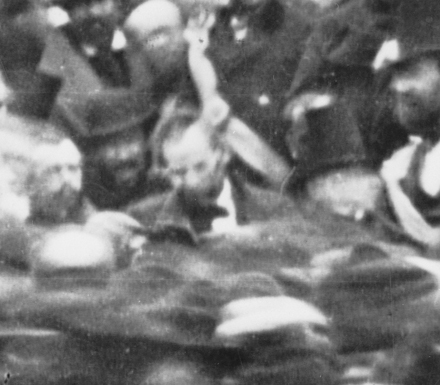
November 19, 1863 + 150
Posted by Joshua Sharf in Civil War, History, National Politics on November 19th, 2013
Today is the 150th Anniversary of the Gettysburg Address. There will be a great deal written about the speech itself, so I’m going to take a slightly different tack.
In 1982, Jacques Barzun was invited to give the Annual Fortenbaugh Memorial Lecture, on the anniversary of the Address, to Gettysburg College. His topic was “Lincoln’s Philosophical Vision,” and he broke it down into three parts: everyday life, ethics and morals, and man’s place in the universe. I can’t find the whole speech online, but there is much in it that is relevant to today’s politics.
The fanatical temper on either side springs from the philosophy opposite to perspectivism – the philosophy of absolutism: according to it, once an important purpose has been adopted, nothing must stop its immediate carrying out – and damn the consequences. Such thinkers are proud of their “principle” and they forge ahead thinking it is the only principle in the case.
Lincoln was a man of principle, too, but he understood how to handle principles – in the plural – in a world of actuality. Just one year before the war broke out, he plainly told his first great audience in the east that he thought slavery wrong and that there was “no middle ground between the right and the wrong.” But he went on to say: “Wrong as we think slavery is, we can yet afford to let it alone where it is, because that much is due to the necessity arising from its actual presence in the nation; but can we, while our votes will prevent it, allow it to spread into the National Territories, and to overrun us here in these Free States?” Lincoln wanted to stiffen resistance against the compromisers such as Senator Douglas, who was “groping” for “sophistical contrivances” that would in the end perpetuate slavery.
The lesson here is to beware of what absolutists call principles. Principles necessarily take the form of abstract words… Such words…lack contents you can name, concrete reference to the world of fact and behavior. That is the reason why the great English writer Dorothy Sayers said, “The first thing a principle does is to kill somebody.” Her conclusion follows from the absolutist temper…Of such stuff are made the idealist, the crusader, the revolutionist. He not only wants instant gratification, but he is also ever-ready to believe that his opponents are wrong on purpose, knowingly and wickedly; he is incapable of saying with Lincoln, “the southerners are just what we would be in their situation.”
And, as importantly:
One more word must be said about pragmatism by way of introducing the second part of Lincoln’s philosophy. The word pragma, a Greek root, means “the thing done,” the upshot. Pragmatism therefore means the doctrine that all human thought is fundamentally directed at doing, at some desired action, now or in future. The pragmatic test asks: What concrete difference would it make if this idea or that idea, this policy or that policy, were taken as the true one? It is the test that mankind has used for thousands of years in accumulating what we call the truths of experience.
Lincoln was above all a practical politician, who wanted to work within the existing political system to effect change, but wasn’t willing to let its limitations be its demise. He was also one who sought to understand where the other guy was coming from, even as he understood the profoundly moral nature of politics.
The deep irony of the current age is that President Obama, who pretends to Lincoln’s mantle, has based his entire political outlook on believing that his opponents are wrong on purpose, knowingly and wickedly, and being willing to say so, loudly and longly.
At the same time, there’s a small but loud group of Republicans who reject Lincoln’s pragmatism in the name of principle, without realizing that life often consists of sorting out conflicting principles.
The anniversary of that short, profound, complex speech couldn’t come at a better time.
-
You are currently browsing the archives.


