The Economy Has No Pause Button (4)
Posted by Joshua Sharf in Uncategorized on March 22nd, 2021

Of all the lies told about the Wuhan coronavirus and our response to it, one of the most damaging has been the idea that the economy has a pause button, that we could safely halt the economy for weeks or even months, and that when we turned the key, everything would start up again without a hiccup. In the interim, all we needed to do was spread enough cash around. The consequences of that monumental miscalculation are increasingly obvious, as the US economy has a hard time getting all cylinders to fire at all, much less in synch.
The latest evidence comes from the Wall Street Journal, reporting that container traffic at the country’s ports is facing an unprecedented traffic jam. Since last October, more than 25% of incoming containers have waited at least 5 days to be handled, compared to less than 5% normally. Some of this might a result of a labor shortage at the ports, but most of it is from increased imports. Indeed, even as domestic production is in chaos, imports are at an all-time high in dollar terms.
That’s funded by those dollars the Fed is printing. That means that even as small businesses go under, all that money we’re distributing isn’t fueling domestic production, but foreign buying.
The crowded ports are playing havoc with supply chains in general, forcing US plants to shut down or defer production for lack of materials:
The disruptions underscore how several forces are coming together to squeeze the world’s supply chains, from the pandemic-driven rise in consumer demand for tech goods to a backlog of imports at clogged California ports to U.S. factory outages caused by weather woes. They are creating cost increases and delays for numerous industries, company executives and analysts say, affecting profit margins and the prices that companies and consumers ultimately pay for many goods.
“We’ve been scrambling to get enough raw material,” said Tom Nathanson, chief executive of Summit Plastics Inc., who predicted possible lasting damage to the plastics industry in the form of lost customers.
He said the Mississippi company, which makes plastic sheeting for everything from hospital gowns to packaging, was already contending with supply-demand issues before the Texas cold spell. “The costs have absolutely been passed on,” Mr. Nathanson said. “We, as consumers, are feeling that crunch.”
The disruptions, which come as the U.S. and some other economies are beginning to lurch toward normalcy, show how messy the reopening of business is proving to be a year after pandemic’s onset, and how vulnerable supply chains remain.
There’s no doubt that the Texas freeze and the resulting electricity disruption hurt, but the weather-related excuses sound a lot like what we used to hear from the Soviets about their grain harvests. The fact is, short, sharp events like a freeze don’t do lasting damage to an otherwise healthy economy or industry. The damage hasn’t been done by the weather, but by deliberate decisions to shut down production, and subsidize foreign consumer purchases. The sooner we’re done with this nightmare of interference, the better for everyone, except the politicians imposing it.
Zionism Returns
Posted by Joshua Sharf in Uncategorized on March 18th, 2021
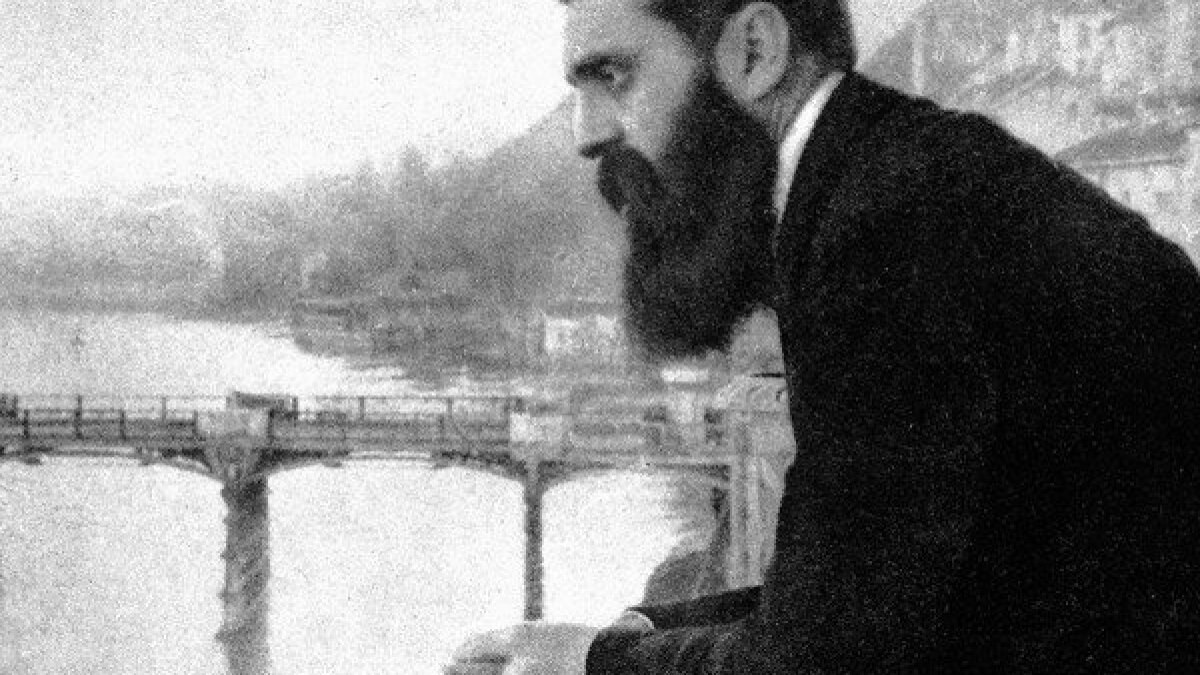
Some of you may have thought it never went away, but judging from the attitudes of what passes for American Jewish leadership these days, it’s at a minimum been in deep hibernation.
This bold statement announcing a new campus-based Zionist organization seeks to revive its spirit among contemporary American Jews. Blake Flayton, a senior at George Washington University in Washington, DC is one of the co-founders of the New Zionist Congress, and he writes with a moral clarity and purpose of vision rarely overtly expressed by mainstream Jewish organizations.
The New Zionist Congress will educate: hosting weekly discussions on all issues pertaining to Jews worldwide, promoting a book-of-the-month for members to read and discuss, and producing a new podcast where young Jews will speak with leaders of our community about the complexities of our people. New Zionist Congress will charter campus chapters, and send speakers to individual universities to mobilize and inspire Jewish students to be fierce activists and teachers. We will sponsor debates, lectures, movie nights, and trips to Israel. We will advocate for Jewish people, not only in the United States, but everywhere in the world, and spearhead efforts to oppose BDS resolutions, fight for the adoption of the International Holocaust Remembrance Alliance definition of anti-Semitism, and combat the new incarnation of Soviet-style conspiracy theories that manically obsess over Zionism and target the only Jewish state as the root of all earthly evils.
Flayton also recognizes the root of the problem – intersectionality and the iron grip it has on college campuses and, increasingly business and broader society. The Jewish left, which includes almost all of the non-orthodox communal leadership, has willingly submitted to its dictates in the hope of recruiting allies against anti-semitism and its contemporary manifestation, anti-Zionism.
I’m sorry. If a Jew is called a Nazi on campus, is it really his or her responsibility to invite the offending student to share a bagel on the quad? If someone bans me from their organization, is it really my responsibility to, as one individual put it to me recently, “internalize ways in which I am not welcoming, and strive for a more intersectional approach to dialogues about oppression and power”? What the hell does that even mean? What other minority community would be forced to endure this jargon-filled hellscape? Every time Jews speak out about anti-Semitism, we’re immediately told to endure a corporate diversity training seminar, one which concludes that it’s still our fault for causing all the drama.
And yet for many in the Jewish community, this is a tolerable price to pay to sit at the table. Well, I don’t want a seat at that table. I don’t want to be anywhere near that table. I am in fact determined to flip that table over.
The mainstream approach has been a spectacular failure. When the Colorado state legislature considered and anti-BDS bill a number of years ago, only Jews showed up to testify in favor of it. That failure has been completely lost on the Colorado JCRC, whose main page is full of “anti-racism” resources and devoid of pro-Jewish ones.
What give Flayton a chance at succeeding is that he’s not a conservative or a Republican. He’s a left-of-center Democrat from Scottsdale, Arizona. His efforts at combating toxic intersectionality received an early boost from Bari Weiss. So this isn’t an attack from outside the Democratic tent.
We’ll be following the New Zionist Congress with great hope and interest.
Mank – With Spoilers
Posted by Joshua Sharf in Uncategorized on March 6th, 2021

You don’t need my donation. You don’t need anybody’s. You have everything it takes, right here.
Meaning you can make the world swear King Kong is ten stories tall, and Mary Pickford a virgin, at 40. Yet you can’t convince starving voters that a turncoat Socialist is a menace to everything Californians hold dear?
You’re barely trying.
That’s Gary Oldman’s Herman Mankiewicz explaining the power of the mass media and imagination to MGM’s production manager Irving Thalberg in the Netflix film Mank.
This article contains spoilers, so consider yourself warned. Proceed at your own risk.
Mank shows famed Hollywood screenwriter Herman Mankiewicz struggling to finish the screenplay for Citizen Kane on Orson Welles’s compressed deadline, as he simultaneously recovers from a car accident, fights off and accommodates his drinking, and otherwise deals with the personal fallout from years of injudicious behavior off the set. In some ways, it’s a biopic of Mankiewicz, one of the great screenwriters from the golden age, but also cursed with a a terribly self-destructive personality.
The movie seeks to answer the question: Why would Mankiewicz write a movie that savaged his longtime personal acquaintances William Randolph Hearst and Hearst’s mistress, the actress Marion Davies? It pins the answer down in the 1934 California governor’s race, and the studios’ and Hearst’s desire to see leftist upstart Upton Sinclair defeated at all costs.
Sinclair, much like a certain 2016/2020 presidential candidate, was a Socialist who became a Democrat in order to run in that primary. If you learned about him in school, it was probably for his journalistic muckraking career, most famous for his book The Jungle, about the terrible safety and sanitary conditions in the meat processing industry.
Sinclair won the primary, scaring not only Republicans but also a fair number of Democrats, and the studio heads went to work to defeat him. Louis B. Mayer, one of the heads of MGM, was also the chairman of the California Republicans, so he not only ran the political campaign, he helped organize the other studios. They coerced employees to donate and threatened to move their operations to Florida.
But things didn’t really click until the studios started doing their movie magic. In a series of scripted newsreels presented as actual man-on-the-street interviews, white, middle-class Californians were seen supporting the Republican, while minorities, immigrants, and migrants were seen supporting Sinclair and his End Poverty In California (EPIC) program. The results were predictably devastating to Sinclair.
In the event, Sinclair was defeated. But he had mobilized a new group of voters, done better than previous California Democrats running for governor, and seen a number of state legislators elected on his platform. The man who would be elected governor in 1938, Culbert Olson, was a Sinclair acolyte.
The scene above is invented. Mankiewicz may never have given Thalberg the idea to use the studios’ storytelling power to defeat Sinclair, but the campaign against Sinclar was very real.
And here’s where the movie puts its thumb on the scale. In Mank, the cameraman chosen to direct the spots kills himself out of shame and guilt at what he’s done, telling us exactly how the filmmakers view those shorts. They consider them a work of shameless propaganda, character assassination, and a betrayal of whatever ethical considerations attend to film.
(In real life, the director shot the films, took his paycheck, went home, and apparently never suffered any pangs of conscience. C’est la guerre. And in real life, Mankiewicz’s politics were somewhat right-of-center; he would have been unlikely to support Sinclair, although he might have bristled at being told to contribute to a political campaign by his bosses.)
The irony of a big tech studio like Netflix making a movie that criticizes 1930s Big Media for trying to gang-tackle an important election after what happened in 2020 is staggering.
For four years, the major newspapers, networks, and social media networks convinced themselves that something had gone terribly wrong in 2016’s presidential election, that they were significantly to blame for not having intervened to prevent it, and damned if they were going to let that happen again.
So the New York Times openly and clearly says that certain journalistic standards will have to be waived in the Age of Trump and The Washington Post signals that “Democracy Dies In Darkness.” Together, they spend 2 years pushing a false “Russian collusion” narrative, a narrative they knew was false because leading network reporters were involved in helping to create it. When the narrative inevitably fell apart, the press never questioned how such a story got such traction in the first place, and continues to interview its leading Democratic proponents such as Rep. Adam Schiff as though nothing untoward had happened.
Then, in 2020, Twitter and Facebook and the large legacy media outlets conspire – there really is no other word for it – conspire to suppress the Hunter Biden laptop story, which showed that ol’ Joe Biden knew exactly what sort of business his son was involved in and was planning to profit handsomely from it.
This stuff is election intervention on a relative scale that the Louis B. Mayer could only dream of.
Let me be clear – I liked Mank. I thought it was well-cast, well-acted, entertaining, informative, and presented a compelling narrative arc. The scene quoted at the beginning of this post is one of three one-on-one confrontations between Mankiewicz and Thalberg that provide the philosophical hinge of the movie.
But the central premise – that there’s something wrong with Big Media becoming a player in elections rather then a reporter of them – is something the filmmakers only believe when it’s someone else’s candidate getting gored.
Denver’s Housing Affordability Problem – And Ways To Make It Worse
Posted by Joshua Sharf in Uncategorized on March 5th, 2021

Photo Credit: Denver Infill Blog
This article was originally posted on Complete Colorado a couple of weeks ago. Since then, HB21-1117 has been introduced, which would fulfill the Colorado Municipal League’s dreams of letting cities and counties require rent control on portions of new construction, whether on new sites or on redevelopment of old sites. Of course, this will do nothing to make the bulk of Denver’s housing or regional housing more affordable. It will allow a few dozen lucky lottery winners to force up everyone else’s rent. That bill is scheduled for a hearing on March 10 in the House Transportation and Local Government Committee.
If you thought housing was getting even less affordable in Denver, it’s not your imagination.
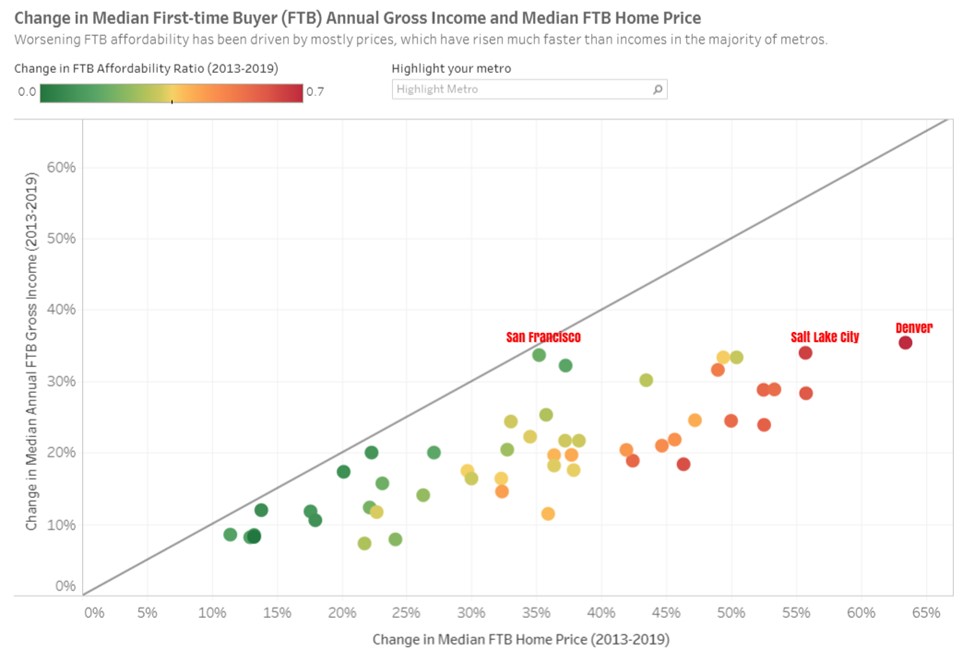
Denver’s affordability for first-time buyers (FTBs) was already among the worst in the country in 2013. By 2019, it had gotten worse faster than any other major metro in the United States, and now stands at #44 out of the top 50, nestled between the current city council’s role models of Seattle and Portland. This according to a 2019 study, Best and Worst Metro Area to Be a First-Time Homebuyer, from the American Enterprise Institute (AEI).
AEI developed a simple measure for FTB affordability: compare the selling price to the income.
To measure FTB affordability in a year, we first compute the price-to-income ratio for FTB transactions from 2013 to 2019, representing a total of over 3.2 million transactions. We then compute the median for each year and metro. The resulting affordability ratio thus accounts for the relative ease or difficultly for a FTB to afford a home given their income. The lower the ratio, the more affordable a metro is for FTBs; the higher the ratio, the more unaffordable a metro is for them.
In 2013, Denver had an affordability ratio of 3.5; by 2019, that had risen to 4.2, the fastest growth in the country, and good enough to drop the city from 38th in the nation to 44th. On a price-per-square foot basis, Denver dropped from 40th to 43rd, and this for some of the smallest homes surveyed for first-time buyers, 1361 sq. ft. in 2019.
Understand that this is a national trend; affordability decreased in all 50 metros surveyed. But in Denver, things got worse the fastest:

The math problem here isn’t hard to solve. Denver’s median income rose a little over 5% per year from 2013-2019, from $65,000 to about $88,000. That change was on a par with San Francisco, Riverside, California, Seattle, Sacramento, and Salt Lake City. But the median FTB home price rocketed up 8.5% per year, from $233,000 to $380,000. That’s 0.8% faster per year than Salt Lake City or Las Vegas:
To understand what this means for blue-collar workers, AEI developed something they call the Carpenter Index: what percentage of entry-level homes are less than 3x the average income of a carpenter, a proxy for a skilled blue-collar worker. Denver is the least-affordable metro in the west, and 94th out of the 100 largest metros, at 15%. Only 15% of Denver’s starter homes are available to blue-collar workers, using traditional mortgage affordability.
This follows a national trend. In 2012, despite being ranked 90th out of 100 metros, more than half of the metro area’s starter homes were affordable to an average blue-collar households.
Denver is to some extent a victim of its own success, as it remains a popular destination for those fleeing California’s urban dumpster fires or those simply looking for someplace nicer to move. But it’s also a victim of its own policy choices.
A new Wharton Index of land use regulatory restrictiveness published in late 2019 had the Denver metro area as the 14th-most restrictive in the country. Through the Denver Regional Council of Governments (DRCOG), it also works to compress development into existing corridors. This policy – known as an Urban Growth Boundary – reduces the land available for new housing, and drives up the price of even entry-level housing.
Urban growth boundaries also greatly limit the construction of new single-family housing, by taking the land necessary for such housing off the market, or by artificially increasing its price. This creates a more stagnant, stratified housing market. People in small homes can’t afford to move to larger houses, creating a traffic jam all the way back to smaller houses and apartments. Building more hi-rises, condos, and apartments may accommodate the influx, but it does nothing to satisfy people’s longstanding ambitions for some space of their own.
Oh, The Thinks You Can’t Think
Posted by Joshua Sharf in Uncategorized on March 2nd, 2021

These Things Snowball
Slippery slopes may be a logical fallacy, but they are a political reality. The latest comes courtesy of the White House and Read Across America Day.
Apparently, some group or other decided that some of Dr. Seuss’s drawings had were racist. Dr. Seuss Enterprises, which publishes his books and guards his legacy, apparently agreed concerning some of his earlier books, and will cease publication of six of them, including And To Think That I Saw It On Mulberry Street, and If I Ran The Zoo.
I ran through Mulberry, and I have to assume this is the image they found problematic. Remember that it’s a caricature from many decades ago, and for this, they have bowed to the Woke Mob and are ceasing publication of a book celebrating a child’s imagination:
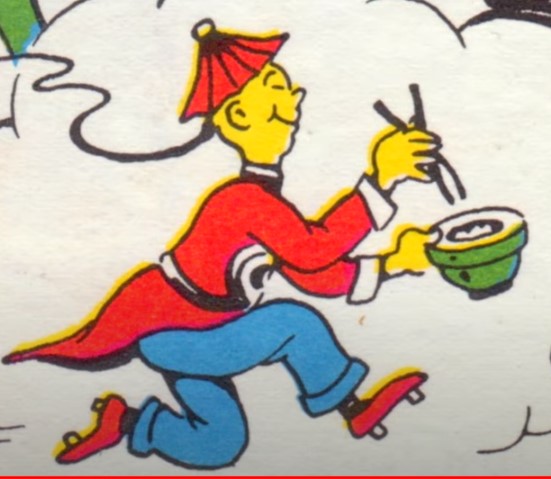
From there, it was on to the races, as the White House scrubbed any mention of Dr. Seuss from its proclamation of Read Across America Day, which – and one might think this somewhat important – is celebrated on Dr. Seuss’s birthday. The reason is that Dr. Seuss, having somehow miraculously hacked into the brains of generations of children, is probably the single biggest contributor to childhood literacy in the history of Planet Earth. Kids read his books, or have them read to them, and their brains catch on fire and they want to read and they want to test out their imaginations. The current leftist administration has now exorcised him from his own day celebrating his contributions.
The defenses of DSE’s actions are mostly along the lines of defending a private company’s right to do with its intellectual property as it sees fit, but that misses the point. Nobody is saying that DSE doesn’t have the legal right to cease publication of these books if it wants. What we’re objecting to is what comes next, because when you give the Woke Mob an inch, there’s always a what comes next.
In this case, what came next was the White House joining in the fun. Loudoun County schools in Virginia, now a wealthy suburb of DC and no longer the rural exurb it was when I lived in the area, also removed Dr. Seuss from its Read Across American Day list.
And it won’t stop with those six books. You know Cat In the Hat, Horton Hears a Who, and The Grinch are next, although maybe the last could be saved by a role-reversal musical showing how Santa’s white supremacy drove the Grinch to #ResistChristmas, or something.
What will replace these imaginative, colorful, joyful books with universal moral lessons? Dour, doleful, bland readings about anti-racism (sic), no doubt.
Impossible, you say?
Well, I’m old enough to remember when it was all about statues of Robert E. Lee. That was before my old school district decided that Thomas Jefferson and George Mason made students feel unsafe.
Purim, Esther, and Us
Posted by Joshua Sharf in Uncategorized on February 26th, 2021
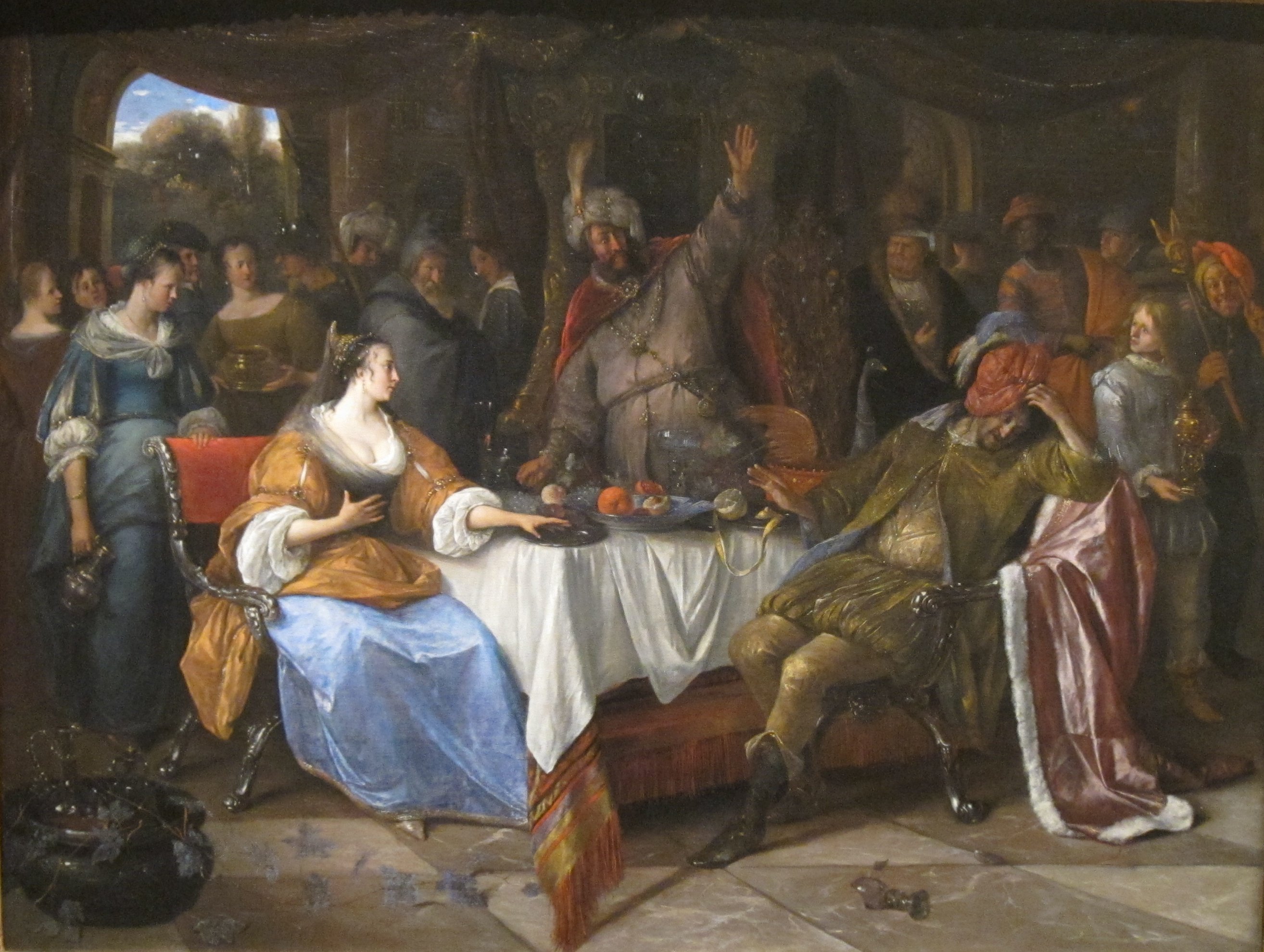
I’ve always thought that the Book of Esther would make a terrific movie. It’s got palace intrigue, public politics, massive stakes, and the fate of empires and the Jewish people hang in the balance of the actions of fully-drawn characters.
That movie has yet to be made, and the oft-cited One Night With the King surely isn’t it, despite the casting of John Rhys-Davies as Mordecai. I mean, it’s a terrible movie, and I had to sit through it twice (don’t ask), and literally the only thing I remember of it was this speech that he gives:
“Do not imagine to yourself that you will escape in the king’s house from among all the Jews. For if you remain silent at this time, relief and rescue will arise for the Jews from elsewhere, and you and your father’s household will perish; and who knows whether it was for a time like this you became queen?”
Of course, Davies had better writers for this speech, since it’s directly from the Book of Esther itself.
Rabbi David Fohrman in his The Queen You Thought You Knew, notes that “if you remain silent” in Hebrew consists of a doubled-verb, for emphasis, and draws a connection to the only other time in Tanach that verb is doubled. It comes in a discussion of when a man can nullify a vow that his wife has made. He can either immediately nullify it, or he can immediately confirm it.
But if he tries to exercise a sort of “pocket veto” by actively remaining silent and doing nothing, well, that’s not an option. It becomes valid over his silence, his deliberate effort to pretend that no vow has been taken. Remaining silent in this case is kind of a coward’s way out, but it makes no sense – either the vow is valid or it’s not.
Esther, similarly, doesn’t have the option of silence and doing nothing. She either goes along with what’s happening or she tries to stop it. Doing nothing is tantamount to letting the genocide of her people happen – she can’t pretend there’s no mortal danger, even though nobody at the palace knows she’s Jewish.
And so, she doesn’t.
Rather than being seduced by the trappings of power and comfort and taking a pass, and not knowing what’s going to happen, she confronts her fears, concocts a risky plan, and runs the gauntlet of guards and idols to go visit the king in his private chamber. She has no idea if the guards have been told to not let anyone in. She has no idea what the king’s reception will be. She doesn’t really have any idea if her plan will work, although it’s a good plan and she’s tried to load the dice as well as she can.
The lesson for today, for each of us not only as Americans but also in the Jewish community, could not possibly be more obvious. Our current Jewish leadership is in disarray, unwilling to confront rising anti-Semitism as long as it comes from its preferred political party, instead pretending there’s no danger.
We know who our Esther is supposed to be. Do we have a Mordecai to slap some sense into them and remind them of their obligations?
Albion’s Seed
Posted by Joshua Sharf in Uncategorized on February 21st, 2021

Our American history book club’s official selection was The Barbarous Years: The Peopling of British North America, 1600-1675, by Bernard Bailyn. But since I’m ridiculously competitive, I also read the additional 900 pages of David Hackett Fischer’s Albion’s Seed, which had come highly recommended by a number of friends.
Fischer traces the British settlement of North America to four main waves of migration, originating in four different regions in Britain at four different times, bringing with them four distinctive folkways that proved to be surprisingly durable here in the New World. Their social and political attitudes, and their distinctive interpretations of liberty, set the tones for the four different regions they settled, persisting often into the 20th Century, and the interplay of the four, with the occasional dominance of one or another, greatly affected national politics.
Fischer identifies four main English folkways that came to dominate what would become the United States. These are the Puritans who came here from 1620-1650, settling in New England; the Quakers and sympathetic (mostly) German Pietists who came here from 1675-1700; the Virginia Cavaliers, sympathetic to the Crown in the English Civil War, arriving in the mid-1600s, and the Anglo-Irish or Scots-Irish who settled the backcountry, coming in a series of waves from 1700 to about 1775.
Each of these migrations came from fairly specific locations back in England: the Puritans from East Anglia, the Virginians from Wessex and Mercia, the Quakers from the north Midlands, and the backcountry from the Border counties near the England-Scotland line. While none of the sections was settled exclusively from those areas, each of them drew at least 60% of their populations from them.
Fischer’s genius here is two-fold. First, he traces back distinctive cultural features to the groups’ regions of origin in England, including clothing, house design, language, relations between age groups and between the sexes, and so on. Many elements that historians had assumed were developed here on this side of the Atlantic in response to the Indians they encountered, or the geography where they settled, were actually brought over. Even terms such as “hoosier” or “redneck,” the origins of which frequently are the subjects of social media arguments and bar bets, were already in use back in England.
The fact that generations of historians continued to tell what amount to just-so stories about the layout of the Puritan house or village, for instance, should be profoundly disturbing, and cause for great skepticism concerning any generally accepted historical consensus.
The second great insight here is the persistence of these cultural differences, which were often the actual reasons for political differences we have traditional explained by other factors. A friend of mine who teaches American colonial and Revolutionary history points out that the best way to approach the colonial period, especially up to about 1750, is to treat the various regions as more or less independent entities, with occasional interaction.
Fischer himself takes it a step further, pointing out that the four folkways didn’t just operate independently before the Revolution, they actually detested each other, sentiments which continued well into the 19th Century. The Puritans saw the Virginians as dissolute and immoral. The Quakers saw the Puritans as tyrannical in their own way. And all three more or less looked down on the Border-country immigrants, which the Scots-Irish returned in at least equal measure.
Their political institutions also came into conflict when they came into contact at the Constitutional Convention. The conflict between the Virginia and the New Jersey plans for the Senate is usually painted as purely as dispute between the large and small states. But Fischer argues that it was at least as much a conflict between Puritans who were used to frequent elections and town meetings, and Virginia aristocrats who were used to controlling the paths to higher power. Massachusetts, a large state, opposed the Virginia Plan as presented.
Likewise, the Puritan idea of “ordered liberty” meant a strong government enforcing morality and limiting destructive dissent. It came in for a rude awakening when the other three folkways turned on it after the John Adams administration, and again after that of his son, John Quincy Adams.
Fischer deserves great credit here for the book’s organization and layout. First of all, he doesn’t stint on maps. You want to see where in America people settled, where in England they came from, and in what numbers, and he’s always got a clearly-labeled, clearly-shaded map for you. I cannot stress enough how frustrating it is to read a history book that skimps on maps.
Second, in each of the four main sections on the four folkways, he’s covering about 20 different aspects of their culture and society. It would have been easy – and lazy – to write each as a completely independent section, leaving the reader who’s working his way through the marriage section on the backcountry to remember what he read 600 pages ago about Puritan marriage customs. But he doesn’t do that. He frequently refers back to the earlier sections, making it easier to compare them all as you read.
The last chapter attempts to trace the post-Independence effects of these four folkways in the country’s presidential politics. It works reasonably well through the Virginia Dynasty, the Age of Jackson, the Civil War, and even the Gilded Age, up until Wilson’s election, after which the more one knows about the politics of the period, the more apparent how selective the supporting data becomes.
The dangers of this sort of analysis when applied to individuals become apparent in the few pages devoted to the country’s WWII leadership. Roosevelt, despite his Dutch name, was of largely Puritan stock, giving a clear moral tone to the war effort; Patton, whose family was Scots-Irish, loved fighting, and loved fighting from the front, but had problems controlling his own temper; Eisenhower, from a German Pietist background, went to West Point for the free education, never saw combat in his career, and sought to win the war with minimal casualties; Marshall, born in Pennsylvania of a family from the old Virginia aristocracy, was born to command, took on tremendous responsibility with tremendous self-restraint, and suffered neither fools nor insubordination. The stereotypes work for these four, but the weakness is in the millions for whom the stereotypes were no longer working.
But excellent books often overstate their cases. Fischer is still able to trace distinctive, persistent political elements back to the original culture created by each folkway. Virginia, for example, governed for many decades by Governor William Berkeley, early on had concentrated power and lower levels of literacy. The governing Cavaliers saw no reason why the populace at large should go to school, nor why independent presses with potentially dangerous ideas should be allowed to operate. And so lower literacy levels continue to persist, even to this day. Likewise, New England and the northern tier of states remain bastions of aggressive state-sponsored moralism, and the backcountry border people are clearly visible in J. D. Vance’s Hillbilly Elegy.
None of the four regions was, itself, a little proto-America, nor was it, in itself, representative all of England during the whole of 1600-1750. Fischer’s insight here is to show how much they brought over of what they became, and how their slow mixing and interaction formed what we are today.
The Economy Has No Pause Button (3)
Posted by Joshua Sharf in Uncategorized on February 20th, 2021

Aside from the wreckage to our small businesses, restaurants, and hospitality businesses, the Democrat shutdown of the economy and the imposition of Wuhan coronavirus work rules have done their worst work on our supply chains. These are the raw materials, components, and wholesale businesses upstream of the assemblers and retailers, that consumers never see. Unless they happen to work in those fields, in which case they see them all too immediately.
But they see the effects of these failures when they have to wait weeks or months for appliances and other products that were formerly readily available.
Economic surveys out of three Federal Reserve districts show these disruptions to be ongoing, if not worsening, a year into the largely-manufactured economic crisis in response to the very real virus.
The New York Fed reported last week that “The surveys also found that supply disruptions were widespread, with manufacturing firms reporting longer delivery times and rising input costs, a likely consequence of such disruptions.” Half of the businesses surveyed said that they had experienced supply disruptions this year, while over 25% said those disruptions had affected their businesses either moderately or substantially.
This confirms earlier reports from both the Dallas Fed and the Kansas City Fed (which has jurisdiction over Colorado). The Dallas Fed survey reported increases in Unfilled Orders, Delivery Time, and Prices Paid for Raw Materials. All of those would indicate supply line pressure. The Tenth District Survey reported decreases in inventories and increases in input prices, which would indicate difficulty in keeping items stocked.
When the shutdowns started, advocates assured us that things could be started up easily, that disruptions would be short-lived, and that people warning otherwise were motivated either by greed or politics. Like most progressive assumptions, they’ve proven to be wrong, and at great cost.
Woke Comes For Math
Posted by Joshua Sharf in Uncategorized on February 16th, 2021

The three women pictured above were pretty good at math. They helped the space program do the calculations that got us to the moon. They were the subject of the film Hidden Figures, nominated for Best Picture the same year that La La Land Moonlight won. For those of you keeping score at home, that was a scant five years ago.
They were remarkable not only for their brains, but also for having overcome both racism and sexism in mid-century Tidewater Virginia. There was no suggestion that, at any point in their mathematical educations, the material was dumbed-down or reorganized for them because they were black or because they were women. There was no suggestion that it needed to be. Grading their school work on a curve would have cheapened their achievements; doing so with their professional work would quite possibly led to men dying in space.
Indeed, at Virginia’s physics and math departments, where I was an undergrad in the 1980s, we were relieved that the standard of truth and rigorous examination required by the physical sciences and by mathematical reasoning rendered them impervious to what was then becoming known as “political correctness.”
It would take the brains of 2020s education professionals to promote such an absurdity.
Pictured below is the layout of a course on “dismantling racism in mathematics instruction.” It is being promoted by the state of Oregon’s education department.
You will note that being expected to work on your own, to show your work, and to get the right answer are considered elements of “white supremacy culture.” Grades are racist. Addressing mistakes is considered bigoted.
None of this is true, of course. Math problems have a right answer, especially those problems students are likely to see in high school. Showing your work is how you prove you understand the concepts, and how you help the teacher identify where you’ve gotten off-track if you end up in the Sea of Cortez rather than the Sea of Tranquility. Students can help teach each other, but eventually each has to understand the material on his own. And for some students, grades can be a powerful incentive to hunker down and do the homework. If these aren’t universally, true, there’s no reason to think they have anything to do with race.
Some of these elements are just part of the merry-go-round of pedagogical debate, dressed up in woke clothing to give it the moral high ground in order to dissuade dissenters. It is considered racist to “prefer procedural fluency over conceptual knowledge.” I grew up in the 1970s and was subjected to this garbage, getting lots of partial credit for “getting he idea right” even when I was sloppy in the execution. Teachers were following a fad, not trying to correct for decades of racism in my almost-all-white elementary schools, but it still contributed mightily to poor attention to detail that I struggled for many years to correct.
The one elements that seems to have some merit – that English-language proficiency shouldn’t be confused with technical proficiency – is also completely disconnected from race. Bilingual education may be foolish, counterproductive, and ultimately ghettoizing, but since immigrants can be of any race, it’s not racist.
Lost on the people with doctorates who designed this nonsense is its own inherent racism, the idea that somehow poor kids non-white students are too stupid to get to the right answer and to show how they got there, or to get there on their own, or to progress from one skill to another. Far from helping these kids, it risks condemning them to a lifetime of mathematical illiteracy by adding to the obstacles they have to overcome.
Mrs. Johnson, Mrs. Jackson, and Mrs. Vaughn would probably have something to say about that.

Mank, And Taking Things Seriously
Posted by Joshua Sharf in Uncategorized on February 15th, 2021

On the online recommendation of a friend, I watched David Fincher’s movie Mank over the weekend. It’s the story of dissolute Herman Mankiewicz as he works to finish the screenplay to Citizen Kane, after Orson Welles has cut a month off of his three-month deadline.
The central question of the film is why Mankiewicz is writing Kane as a takedown of William Randolph Hearst, when he knew both Hearst and Hearst’s mistress, Marion Davies, socially, and was a frequent guest at San Simeon. That’s a question for another post, because it may contain some spoilers.
Part of what makes this movie about Hollywood work is that almost all the main characters are actual historical Hollywood figures, most of them titans of the industry’s golden years in the 30s. Among them is Irving Thalberg, who now has a annual Oscar named after him. Thalberg began life as a writer, but by this time was Louis B. Mayer’s production supervisor at MGM.
Early in the movie, we get a sense of what Mankiewicz thinks of Hollywood, when he sends a telegram to a writer friend of his inviting him out to the coast: “There are millions to be made here and your only competition is idiots.” In a confrontational scene in Thalberg’s office, Mankiewicz resorts to wit and clever condescension. This provokes Thalberg to retort:
I know what I am, Mank. When I come to work, I don’t consider it slumming. I don’t use humor to keep myself above the fray. And I always go to the mat for what I believe in. I haven’t the time to do otherwise. But you, sir, how formidable people like you might be if they actually gave at the office.
A later generation of writers would give at the office, both for better and for worse.
It’s not a particularly original observation to say that social media has encouraged this “court jester” tendency in too many of us, myself included. I’ve often had the idea of FB as a big, multithreaded cocktail party with lots of simultaneous conversations going on. It’s easy to drop in, see where things are, lay down a laugh line, and stick around for a moment to enjoy the laugh reacts.
That’s not always an inappropriate thing to do. Sometimes the conversation itself isn’t very serious. And I happen to best enjoy humor that draws connections between unexpected threads. Maybe there really is something there that’s food for thought.
But then you actually have to go and do the thought. Leaving the connection unexplored is lazy and it’s cheating. A joke itself may be the product of some thought or some intuition or even some analysis. Sometimes it’s an excellent way to quickly encapsulate an entire worldview. But unless you’ve put in the work, it’s a dead end, it’s a lot of icing without the cake.
Posting rewards cleverness, writing rewards thought.
It’s part of the reason that I’ve begun writing again here on the blog. Yes, I want to escape the tyranny of having Facebook own all my writing on subjects as they come up. But it’s also a medium that’s more conducive to thinking things out and considering consequences and implications. I don’t necessarily want to be a humorless Irving Thalberg, but at the end of the day, there’s more substance to a Joseph Epstein than a Henry Mankiewicz.
We’d all be better off stretching those muscles more often when it comes to serious subjects.


